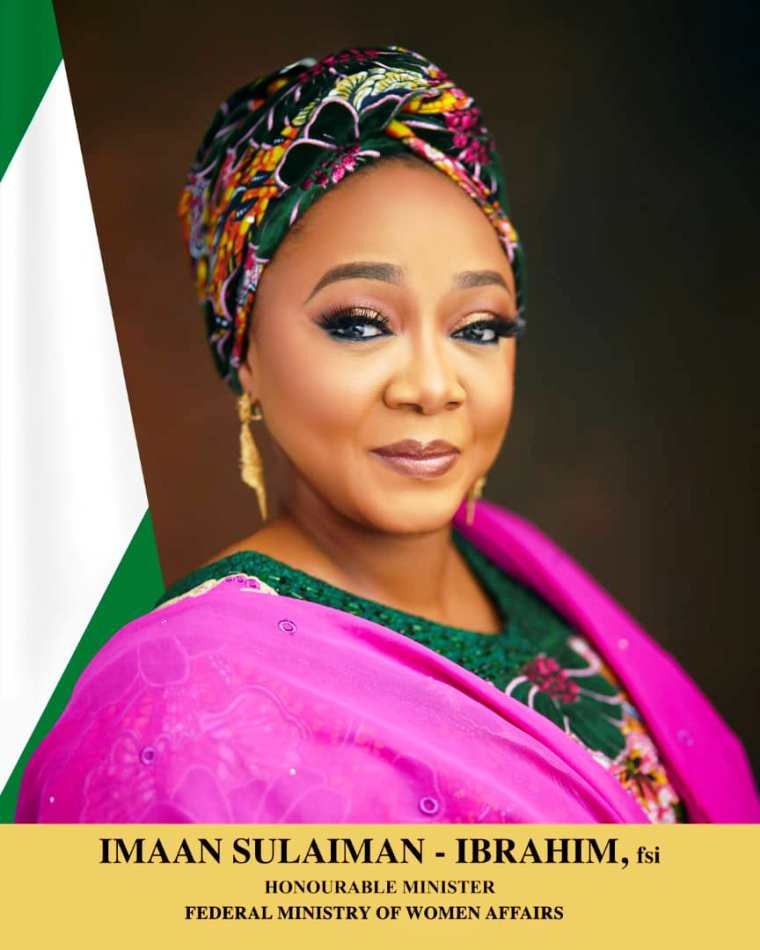
Alright, gather ’round, because it was Democracy Day in Nigeria! And what better way to celebrate the glorious march of self-governance than with a good old-fashioned ministerial felicitation? Our very own Minister of Women Affairs, Hajiya Imaan Sulaiman-Ibrahim, has stepped up to the podium, cleared her throat, and delivered some truly inspiring words to the Nigerian women.
Now, as someone who’s spent a fair chunk of my life knee-deep in Nigeria’s socio-legal landscape – think of me as a sort of forensic anthropologist for policies, only less dusty and with more opinions – I’ve seen my share of pronouncements. And this one, well, it’s a gem.
The Minister, bless her heart, extended her warm regards and then, apparently, unveiled the secret sauce to Nigerian women’s empowerment: the “One Trillion Dollar Economy.” Yes, you heard that right. Not a billion, not even a hundred billion, but a full-fledged, mind-boggling, ‘where-do-we-even-store-all-those-zeros?’ trillion dollars.
According to the Minister, this magical trillion-dollar economy is poised to “unlock doors for Nigerian women in leadership, in enterprise, in innovation, in governance.” And frankly, I’m here for it. My vision of a “door unlocking” involves less fumbling with keys and more a sudden, dramatic poof of cash appearing in the hands of women trying to start a business or, you know, just get reliable electricity for their hair salon.
She also mentioned increased budgetary allocations to the Ministry. Which, speaking from experience as the former country director for Oxfam and Ashoka, is a bit like saying “we’ve added more water to the leaky bucket.” The real question isn’t just how much is allocated, but how much actually makes it past the administrative sieve and into the hands of the women who need it most. Because, and here’s where my “recovering woman, lawyer & aid worker, opinionated & neurotic” self kicks in, budgets are great, but the actual lived experience of Nigerian women, particularly those navigating the daily horrors of sexual and gender-based violence (a subject on which I’ve spent literally decades, with thousands of victims), often tells a different story.
I mean, if these trillions are truly unlocking doors, are they unlocking the doors of safe houses for SGBV survivors? Are they unlocking the doors of clinics providing vital healthcare for women in rural areas? Are they unlocking the doors to genuine financial independence for market women, free from extortion and harassment?
My Igbo-Nigerian POV, which, by the way, I privilege, sees these pronouncements through a different filter. We’re not just looking for symbolic gestures; we’re looking for systemic shifts.
And as a feminist influenced by the likes of Chimamanda Adichie (I am an alumni of her workshop, humblebrag moment over), and the practical wisdom of “Motherism” and “Womanism,” I’m always interested in the construction and performance of gender in different cultural settings. And frankly, this performance of “empowerment” by a Minister, while nice, needs to align with the unvarnished oral histories of women who are still struggling to pay school fees or escape abusive situations.
So, while we applaud the Minister’s felicitations and her optimistic vision of a trillion-dollar future where doors magically unlock, those of us who’ve been in the trenches – battling institutional discrimination against women, trying to set legal precedents, or just building social enterprises like the Women’s Crisis Centre (yes, I did that, twice!) – can’t help but wonder: Where exactly is this “One Trillion Dollar Economy” currently hiding? Is it behind one of those unlocked doors? Because if so, somebody needs to send us the memo, and maybe a map, so we can finally join the party.
Until then, I’ll keep writing sentences “as clean as bone,” documenting atrocities, and trying to return the gaze with the West as object. Because while democracy is great, accountability is even better. And so is a really, really large pile of actual, accessible cash for Nigerian women. Just saying.
 MzAgams