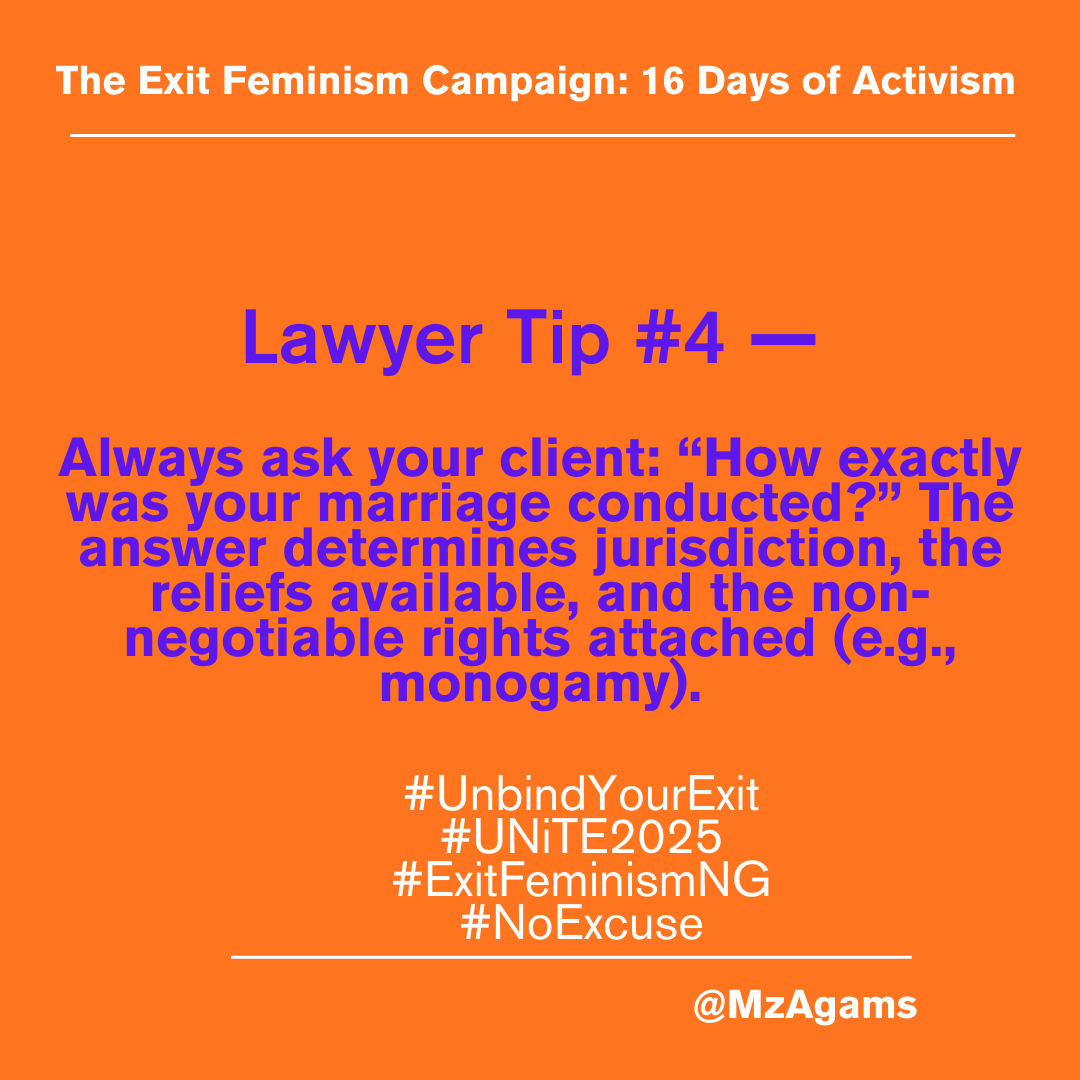
1️⃣ Customary Marriage Is NOT Automatically Valid Everywhere
Many people think once a bride price is paid, the marriage is valid nationwide.
Not true.
Customary marriage is:
- Valid only within the community whose customs were followed.
- Subject to local variations that can make it invalid outside that cultural context.
- Vulnerable when challenged in court because the burden is on the party relying on the custom to prove it.
In contrast, statutory marriage enjoys automatic nationwide recognition and is harder to dispute.
👉 Unknown fact: Some customary marriages collapse in court simply because no one can prove the exact custom that was allegedly followed.
2️⃣ Statutory Marriage Creates Higher “Human Rights” Protections
Under statutory law:
- A spouse cannot be expelled from the matrimonial home.
- Each partner has equal legal standing in property disputes.
- Divorce requires judicial oversight, ensuring procedural fairness.
- The Marriage Act and Matrimonial Causes Act embed constitutional rights like dignity, equality, and non-discrimination.
Customary marriage, however:
- Allows practices like marital exclusion, banishment, or family council arbitration.
- Often permits unilateral dissolution by returning bride price.
- Is shaped by patriarchal norms that courts do not automatically override.
👉 New insight: Statutory marriage quietly elevates the constitutional rights of women — without needing a separate “human rights” case.
3️⃣ Under Customary Marriage, Property Rights Are Highly Uncertain
The biggest legal risk is property.
In customary marriage:
- Property is usually governed by male-line inheritance rules.
- “Self-acquired property” by a woman may revert to her husband’s lineage.
- Courts often defer to customs that exclude wives from intestate inheritance.
- Polygamy complicates ownership, especially where property is jointly developed.
Under statutory marriage:
- Property accumulated during marriage is presumed to be jointly owned.
- Courts apply principles of fairness, contribution (financial or otherwise), and equitable division.
- Surviving spouses have strong intestate rights under the Administration of Estates Laws.
👉 Unknown fact: A woman married under customary law can spend 20 years building wealth with her husband — and legally end up with nothing if he dies intestate.
4️⃣ Customary Divorce Has No Universal Standard
Customary divorce can be triggered by:
- Return of bride price
- Family meeting decisions
- Abandonment
- Mere separation, depending on custom
This makes enforceability messy, especially when:
- The husband refuses to accept the returned bride price
- Families dispute procedure
- One partner later remarries under statutory law
Statutory divorce, however:
- Requires formal grounds
- Ensures property, child custody, and maintenance are formally resolved
- Creates predictable, court-enforced outcomes
👉 Little-known issue: Customary divorce may not produce a valid “certificate of divorce,” making future marriages vulnerable to being voided as bigamous.
5️⃣ Polygamy Is Not Just Allowed Under Custom — It Reshapes All Rights
Most people know customary marriage allows polygamy.
Few understand what it means in practice:
- Senior and junior wives can have different inheritance standings.
- Children from different wives fall under distinct succession rules.
- Property ownership becomes lineage-based, not couple-based.
- Courts often uphold polygamous rights even when unfair to the first wife.
Under statutory marriage:
- Polygamy is criminalised if another statutory marriage exists.
- Rights are simplified: one spouse, clear duties, clear property claims.
👉 Insight: Polygamy doesn’t just add more wives — it completely restructures property, authority, and succession inside the family system.
6️⃣ A Customary Marriage Converts to Statutory ONLY Through a Fresh Ceremony
Many people think a registry certificate “updates” a customary marriage.
But legally, there is no conversion process.
You must perform:
- A new statutory ceremony
- In a licensed place of worship or registry
- With a marriage certificate issued under the Act
Without this, the marriage remains customary, no matter how many photos you took at the registry gate.
👉 Insight: Traditional + church wedding does NOT equal statutory marriage unless the church is licensed under the Marriage Act.
Bottom Line
Customary marriage is flexible, culturally rooted, and communal — but legally uncertain.
Statutory marriage is rigid, formal, and bureaucratic — but protects your rights under modern law.
Most Nigerian women discover these differences after a death, divorce, or property dispute.
The safest route?
💡 Most People Perform BOTH:
- Customary marriage for family legitimacy
- Statutory marriage for legal protection
This dual approach blends tradition with constitutional rights — without leaving your future to chance.
CTA 1: SURVEY (Anonymous)
Ever been confused about whether your marriage gives you monogamy or polygamy rights?
Tell me in the survey — let’s gather real data.
👉 Take our free quiz: Nigerian Marriage Quiz: Statutory or Customary
Want my full course “Family Law in Nigeria: What Every Woman & Lawyer Must Know”?
👉 Join the waitlist: Family Law in Nigeria Course
 MzAgams