Comparative analysis: Precious Chikwendu; Tonto Dikeh; Regina Daniels; May Edochie
Executive summary
These four cases show how wealth, political influence, celebrity, and digital platforms interact to shape outcomes in family disputes in Nigeria. Common threads: weaponisation of criminal and civil processes, media and social-media narrative warfare, differential access to enforcement (police/courts), and gendered consequences for credibility, custody, and reputation. The differences — political immunity, fanbase mobilisation, customary vs statutory marriage status, use of forensic digital manipulation (deepfakes/voice cloning) — reveal varied risk vectors for women and children.
1) Precious Chikwendu v. Femi Fani-Kayode (FFK) — timeline & core themes
Core issues: alleged domestic violence, custody denial, criminal charges, police/state influence, public narrative warfare.
Key timeline (selected):
- 24 Nov 2018 — Alleged knife incident at Asokoro home; later becomes centrepiece of criminal charges.
- 2020 — Public marital breakdown and separation; children withheld.
- 8 Dec 2021 — Customary Court, Kubwa: order that FFK allow Precious access to their four sons at a neutral venue over Christmas/New Year; Precious later alleged FFK defied this order. (Premium Times, 2021).
- 14 Feb 2022 — Police arraign Precious on multiple counts including attempted murder; the matter proceeds in Federal High Court.
- 27–29 Apr 2022 — Re-arraignment date fixed for April 29 for amended charge; high publicity around hearing dates.
- June 2022 — Media reports of a “reconciliation” and Precious regaining access; commentators divided whether this indicated genuine settlement or coerced retreat.
“Chikwendu, alongside three others, were initially arraigned on February 14 on a 13-count charge” — TheCable (Apr 27, 2022). TheCable
Analysis & themes:
- Power & process: FFK’s political standing and access to state machinery (police, security) complicated enforcement of court orders and may have prolonged litigation or shaped enforcement. This is a classic pattern where powerful respondents can resist or frustrate access orders.
- Criminalisation as leverage: The resurfacing and criminalisation of a past alleged incident (2018) during marital conflict is a repeated tactic in high-power disputes — it both criminalises the woman and diverts public sympathy.
- Digital violence & reputation: The public framing (accusations about breastfeeding, employing nannies, “madness” allegations, committal orders) circulated online, shaping public perceptions and undermining maternal credibility in custody discussions.
2) Tonto Dikeh v. Olakunle Churchill — timeline & core themes
Core issues: domestic violence allegations, public accusations (social media & YouTube), counter-suits, custody & child welfare.
Key timeline (selected & public):
- 2014–2018 — Marriage, birth of son, and eventual separation; public disputes escalate.
- 2018–2020 — Churchill sues Tonto in various matters (including demands relating to the son and reality-show appearances); Tonto publicly accuses Churchill of fraud, ritualism and domestic violence in her YouTube series “The Evidence” (2019). Media outlets covered the back-and-forth extensively.
- 2019–2020 — Legal actions and countersuits; Tonto asserts custody of son and accuses Churchill of neglect/abuse; Churchill pursues damages suits. Premium Times Nigeria
Tonto’s online exposés accused Churchill of “internet fraud and ritualism,” which she set out in her multi-part videos — a raw use of digital platform to publicise private complaints. YouTube
Analysis & themes:
- Digital self-help & risk: Tonto used social media and long-form video to present her evidence and mobilise public opinion — an empowering move but one that also invites counter-litigation, defamation claims, and new forms of harassment.
- Custody & celebrity: As with other celebrity disputes, the child becomes a site of public performance and legal contestation; celebrities’ use of media amplifies but does not immunise them from legal consequences.
- Comparative enforcement: Churchill’s use of civil suits and public denials shows how men with resources can pursue legal countermeasures (N500m suits, threats to remove son from projects) that strain the other party’s capacity to litigate. Premium Times Nigeria
3) Regina Daniels v. Ned Nwoko — timeline & core themes
Core issues: age, consent debates, public viral video of the wife in distress, gendered public shaming, customary vs statutory ambiguity, children and reputation.
Key timeline (selected & public):
- Marriage & public profile: Regina’s marriage to Senator Ned Nwoko attracted huge publicity. In 2025 disputes and a viral video in which Regina stated she felt “nothing” in the husband’s home circulated widely. This led to intense online debate and counter statements from Nwoko.
- Digital smear & surveillance: Media coverage and social feeds amplified the dispute, with public figures weighing in and rumours spreading; recent fact-checks documented gendered disinformation and privacy breached — relevant to how Regina’s public image was managed.
“Regina Daniels cried out… saying she felt like ‘nothing’ in her husband’s house.” (multiple social posts and clips).
Analysis & themes:
- Public policing of women: Regina’s case is illustrative of social enforcement of patriarchy: public opinion, prophets, and online mobs police women’s choices. The effect on her children is an added, long-term harm.
- Customary ambiguity: Where marriages rely on customary rites or mixed celebrations, legal clarity around rights (inheritance, custody, property) becomes contested, enabling men to exploit ambiguities.
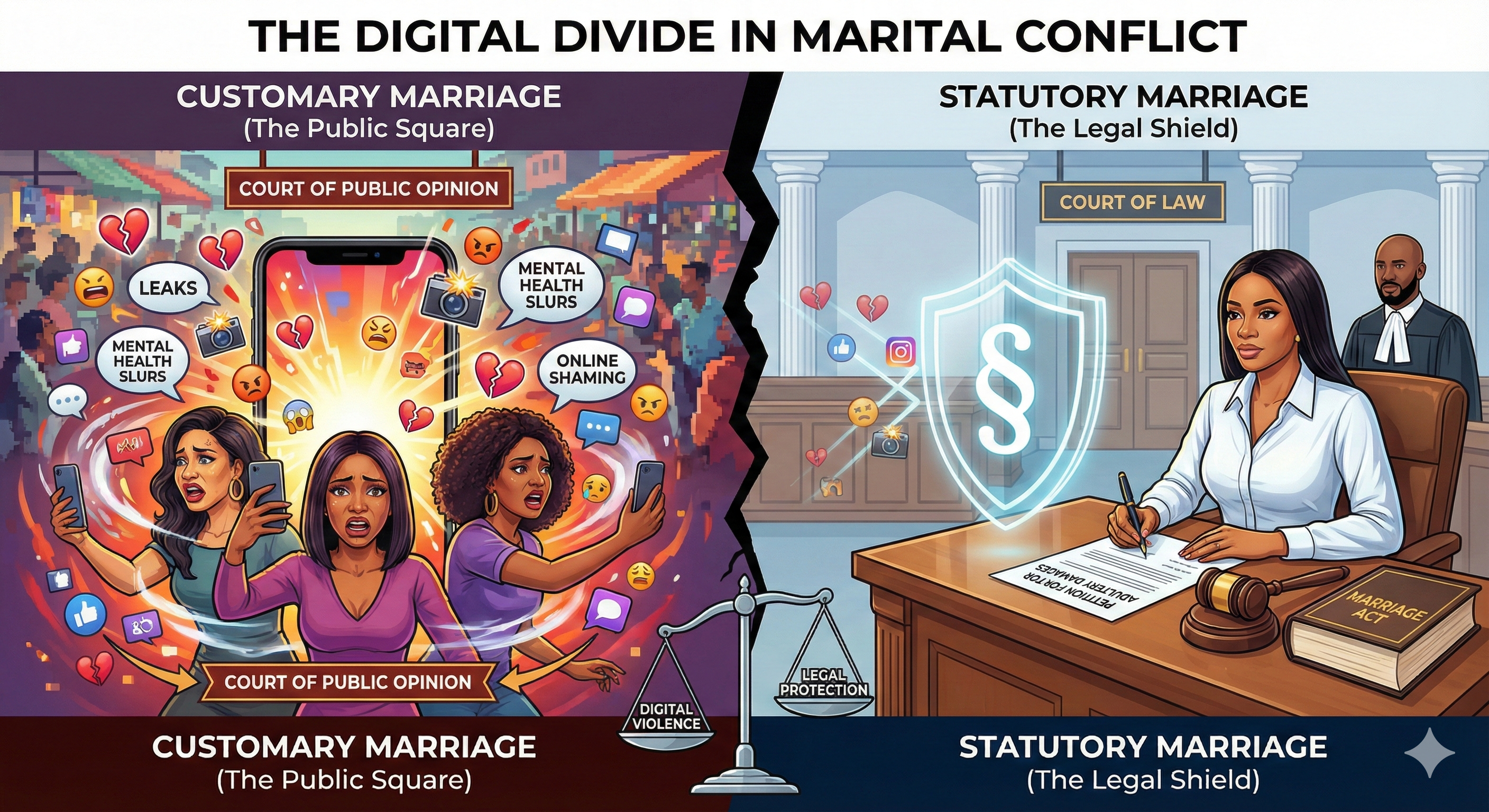
- Digital violence: Viral videos, memes, and commentary become tools to punish or discredit women publicly; the damage is long-lasting and often irreversible.
4) May Edochie v. Yul Edochie — timeline & core themes
Core issues: public marital breakdown, fanbase harassment, lawyer withdrawal due to toxic online environment.
Key timeline (selected & public):
- 2024–2025 — May’s legal proceedings (divorce) were marked by intense online fandom mobilisation (“May Nation”), culminating in her lawyer withdrawing in mid-July 2025 citing harassment and threats directed at his staff. This shows how third-party fan aggression can alter access to justice.
“May Edochie’s lawyer withdrew… citing harassment by fans.” Daily Post
Analysis & themes:
- Third-party online violence: Unlike the other three, May’s case spotlights how fan armies can weaponise social media to intimidate legal actors and opponents — causing counsel to withdraw and skewing litigation capacity.
- Collateral litigation effects: When legal representation collapses under digital pressure, the aggrieved party’s ability to pursue remedies is directly impaired.
Comparative analysis — common patterns and divergent features
Common patterns
- Digital amplification: All four cases show how social media and digital platforms turn private disputes into national theatre — shaping evidence perception and judicial atmospheres.
- Weaponisation of process: Criminal charges, civil suits for damages, and misuse of policing are recurrent tactics to delegitimise women or avoid enforcement (Precious; Tonto; Regina’s family arrests).
- Asymmetric resources: Wealth and access to state or social power (political office, celebrity, fanbase) materially affect the pace, enforcement, and outcome of disputes.
- Gendered credibility attacks: Narrative tactics (accusations of madness, breastfeeding claims, “jealousy” framing) systematically erode women’s perceived parental fitness, often outside court but with legal consequences.
Divergent features
- Political clout vs fan mobs: FFK’s political influence meant police and state instruments entered the dispute; May’s case shows mass social mobilisation can produce a different kind of pressure that targets lawyers and courts.
- Public self-exposure vs private evidence: Tonto chose public exposés (YouTube series) to build a counter-narrative; Regina’s viral distress footage was not purposefully publicised by her but became public evidence of distress. These differences change legal strategy and risk.
- Customary vs statutory status: Where statutory registration exists, women have clearer legal protections; where customary practices dominate, ambiguity allows men to exploit gaps (custody, inheritance). Regina/Precious/May/ Tonto’s situations all show interplay between customary practices and digital visibility.
Recommendations — law, practice & advocacy
- Digital-evidence protocols: Courts and counsel must adopt standard practices for preserving metadata, verifying deepfakes, and admitting digital evidence fairly.
- Protect counsel & litigants from online abuse: Judicial authorities should recognise and sanction third-party harassment that obstructs legal representation. (Lessons: May’s lawyer withdrawal). Daily Post
- Fast-track enforcement for access orders: Create mechanisms ensuring prompt enforcement of child-access orders, insulated from political interference. (Lessons: Precious’ access orders and alleged defiance). TheCable
- Integrate digital-violence remedies into family law: Expand domestic violence and custody frameworks to expressly cover digital impersonation, deepfakes, doxxing, and mass harassment. (Align with UNiTE 2025).
- Legal literacy & preventative documentation: Urgent public education for women (marriage registration, evidence preservation, digital safety) and legal aid expansion to vulnerable women.
Sources (selected reporting & documentation)
- TheCable — Precious Chikwendu to be re-arraigned for attempted murder, Apr 27, 2022. TheCable
- Premium Times — Police arraign Fani-Kayode’s ex-wife over alleged attempted murder, Feb 14, 2022. Premium Times Nigeria
- Vanguard — various coverage on Precious/FFK re-arraignment & reconciliation, Apr–Jun 2022. Vanguard News
- PremiumTimes / TheCable / other outlets — coverage of Regina Daniels viral video and public discourse. YouTube+1
- PremiumTimes / news archives — Tonto Dikeh & Churchill legal disputes and “The Evidence” series; Churchill suits (various dates). Premium Times Nigeria+1
- DailyPost / Asaba Metro — May Edochie: lawyer withdrawal and fan harassment (2025). Daily Post+1
Final note
These cases are not isolated scandals — they are structural warnings. They show the convergence of private violence, public spectacle and digital weaponry. For legal reformers, campaigners and practitioners, the task is clear: build legal, digital, and community systems that protect women’s rights, enforce access orders regardless of power, and treat digital violence with the seriousness it now deserves.
Help me understand Nigerian women’s biggest challenges in marriage, custody & divorce.
Take the 2-minute survey:Nigerian Women’s Legal & Marital Challenges
Want my full course “Family Law in Nigeria: What Every Woman & Lawyer Must Know”?
Join the waitlist:Family Law in Nigeria Course
 MzAgams