
1. Executive Summary: When “Exit” Is Criminalized
This case study examines the weaponization of the Nigerian criminal justice system by corporate entities to suppress consumer criticism. It focuses on the prosecution of Chioma Okoli, a female consumer who was arrested, detained, and prosecuted under the Cybercrimes Act for posting a negative review of a tomato paste brand on Facebook.
The case serves as a primary exhibit of State-Sanctioned Digital Violence—where economic wealth (Erisco Foods) colludes with state machinery (The Nigeria Police Force) to crush individual agency. It highlights the gendered dimensions of this power play and the erosion of the libertarian “exit” option for Nigerian consumers.
2. Campaign Context: Defining Digital Violence
Under the Exit Feminism Campaign, we define violence not just as physical harm, but as structural coercion. This case fits squarely into the definition of Technology-Facilitated Gender-Based Violence (TFGBV).
- The Digital Trigger: A woman used a digital platform (Facebook) to express an opinion.
- The Analog Punishment: The response was not digital engagement, but physical arrest, detention, and interstate transfer.
- The “Unbreak” Challenge: The ₦5 billion lawsuit and criminal charges against a pregnant woman were designed to psychologically “break” her, forcing a retraction not through logic, but through fear.
3. Introduction: The “Sugar” That Broke the System
On September 17, 2023, Chioma Okoli did something mundane. She opened a tin of Nagiko Tomato Mix, tasted it, and posted her opinion on Facebook. She wrote, quite simply, that the “sugar is just too much.”
In a functioning market economy, a consumer’s dissatisfaction leads to the classic “Exit” option: you stop buying the product. In Nigeria, however, where the “Big Man” complex permeates corporate governance, dissent is treated as insurrection.
Erisco Foods Limited did not just refute her claim; they declared war. The company’s CEO, Eric Umeofia, publicly vowed to sue her for ₦5 billion. More insidiously, the machinery of the Nigerian state—specifically the Inspector General of Police (IGP) Intelligence Response Team—was mobilized to arrest a nursing mother in Lagos and transport her across the country to Abuja.
4. Factual Matrix
The timeline of events reveals a disproportionate escalation characteristic of power asymmetry.
- The Act (Sept 17, 2023): Chioma Okoli posts a review on Facebook regarding Erisco’s Nagiko Tomato Mix. She engages in the comments, asserting that the product was overly sugary.
- The Corporate Reaction (Sept 19, 2023): Erisco Foods petitions the Police, alleging “criminal conspiracy,” “de-marketing,” and “blackmail.” They frame a consumer opinion as an organized syndicate attack.
- The Arrest (Sept 24, 2023): Officers from the Nigeria Police Force arrest Okoli in Lagos. She is detained and subsequently transferred to Abuja, hundreds of kilometers from her home and support system.
- The Charge (2024): Okoli is arraigned at the Federal High Court, Abuja. The charges are predicated on the Cybercrime (Prohibition, Prevention, etc.) Act 2015, specifically accusing her of sending messages via a computer system “with intent to annoy, inconvenience, or insult.”
- The Collapse (Oct 29, 2025): At trial, the prosecution attempts to tender emails and screenshots as evidence. The defense, led by Inibehe Effiong, objects under Sections 84 and 104 of the Evidence Act. The judge, Justice Peter Lifu, slams the police for wasting the court’s time after they fail to authenticate their digital evidence.
5. Legal Analysis: The Weapon and The Shield
The legal battleground in IGP vs. Okoli was fought on two distinct fronts: the substantive charge (Cybercrime) and the procedural defense (Evidence Act).
5.1. The Cybercrimes Act as a Tool of TFGBV
The prosecution relied on Section 24 of the Cybercrimes Act 2015, which criminalizes “cyberstalking.”
- Analysis: This section was designed to prevent cyber-bullying. Here, it was repurposed to criminalize consumer feedback. By categorizing a bad review as “cyberstalking,” the state effectively criminalized the act of being an unsatisfied customer.
- Constitutional Conflict: This application of the Act directly contradicts Section 39 of the 1999 Constitution, which guarantees freedom of expression.
5.2. The “Unbind” Strategy: Section 84 & 104
The turning point in the trial was the defense’s use of the Evidence Act 2011.
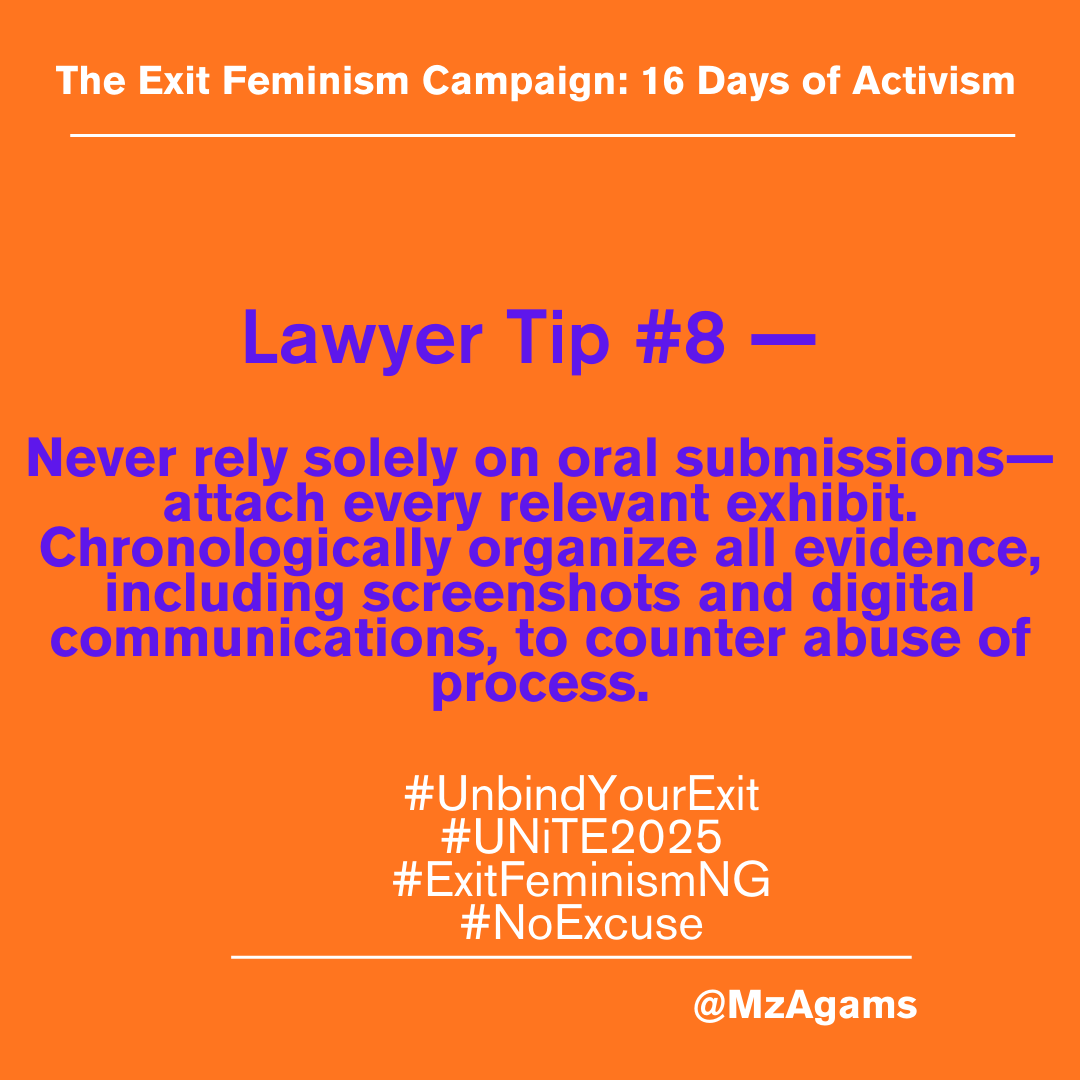
- Section 84 (Admissibility of Electronic Evidence): The prosecution failed to provide the mandatory Certificate of Compliance required to prove the integrity of the computer that generated the evidence.
- Implication: This highlights that the “Legal Exit Strategy” often lies in technical procedural law. You “unbind” yourself from the state’s grip by forcing them to prove every single digital step.
6. Structural Power Analysis: The “Naija by Nature” Lens
6.1. Corporate Power vs. The Individual
Erisco Foods utilized “Economic Asymmetry.” They have the capital to sustain a multi-year legal battle; Okoli does not. The punishment is the process itself.
6.2. State Machinery as Private Security
The Nigeria Police Force effectively acted as the private security arm of Erisco Foods. This is a recurring motif: public institutions are privatized by the highest bidder.
6.3. Gender Dynamics: The “Unruly Woman”
- The Patriarchal Reflex: Umeofia’s rhetoric—that he would “rather die” than let her go—is the language of patriarchal dominance. A woman speaking back, publicly and unrepentantly, is seen not as a consumer exercising a right, but as a child who must be disciplined.
- The Death of “Exit”: Okoli did exit; she stopped using the product. But the system followed her. It dragged her back. When corporate power is absolute, you are not allowed to simply walk away; you must be made an example of.
7. Implications for the Exit Feminism Campaign
7.1. The Chilling Effect
If this prosecution had succeeded, it would have established a precedent that any negative review could be prosecuted as a cybercrime. It would have silenced the entire Nigerian digital space.
7.2. Your Legal Exit Strategy
For women in Nigeria, this case teaches a vital lesson: Digital literacy is legal self-defense.
- Unmute: Speak your truth, but understand the legal landscape of “fair comment” vs. “defamation.”
- Unbind: If targeted, do not panic. Demand that every piece of digital evidence against you meets the strict standards of the Evidence Act.
- Unbreak: Recognize that the system’s cruelty is a tactic. Survival is the ultimate rebellion.
8. Conclusion: A Matter of Voice
Chioma Okoli is not just a defendant; she is a symbol of the friction between the old Nigeria—hierarchical, patriarchal, and immune to criticism—and the new digital Nigeria—vocal, democratized, and unafraid.
Join the Campaign: #WomenOnly #4WomenOnly #NoPricks #ChiomaOkoli #DigitalRights #UnmuteUnbindUnbreak
References:
- Cybercrime (Prohibition, Prevention, etc.) Act, 2015
- Evidence Act, 2011 (Sections 84, 104)
- Constitution of the Federal Republic of Nigeria, 1999 (Section 39)
Survey (Anonymous): Women: Have you ever been denied access to your children? 👉 Take the 2-minute survey: Nigerian Women’s Legal & Marital Challenges
Lawyers: What do you do when your case stalls in court for more than 2 years? Want my full course “Family Law in Nigeria: What Every Woman & Lawyer Must Know”?
👉 Join the waitlist: Family Law in Nigeria Course
 MzAgams