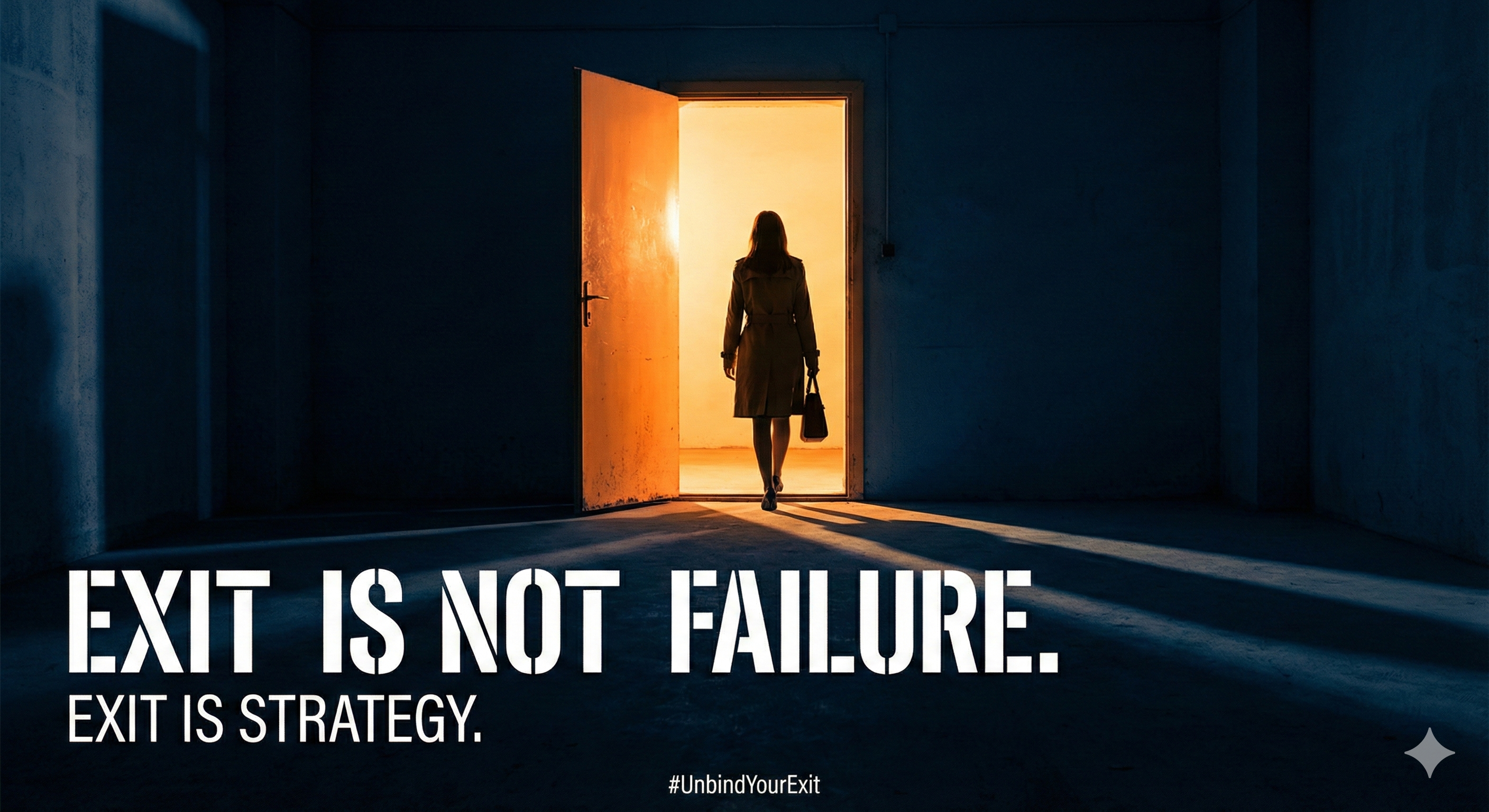
In Nigeria, we have a PhD in “Managing.” We manage the National Grid. We manage fuel scarcity. We manage bad governance. And, tragically, women are taught that to be a “Good Woman” means to “manage” an abusive, dead, or dangerous marriage.
Society points to a couple celebrating their 50th anniversary and calls it a “Success.”
But I ask you: Is a prison a success just because the prisoner never escaped?
Today, on Day 15 of #16Days, we are looking at the core philosophy that has driven every post in this campaign: Exit Feminism.
What is Exit Feminism?
My personal approach is feminist, free-market, and libertarian. I do not believe we should wait for the government to save us. I do not believe we should wait for “patriarchy” to suddenly develop a conscience. It won’t.
Exit Feminism is about Personal Empowerment. It acknowledges that structural abuse is often legally and socially entrenched. Therefore, the most revolutionary act a woman can perform is not just to protest the cage, but to acquire the resources and the legal knowledge to build a key.
It is not just about protection; it is about empowerment through legal and financial independence.
The Calculation of Cost: An Economic Decision
To my audience in the Diaspora (US, UK, Europe): You understand “Exit” better than anyone. You left a country that wasn’t working to build a life in one that (mostly) does. You paid a high price for that exit—visa fees, cold weather, starting over, loneliness. But you paid it for freedom. Divorce is simply another form of migration—migrating from a place of misery to a place of peace.
To my sisters in Nigeria: I know the calculation you are making. The cost of exiting a marriage is terrifyingly high.
- It costs Money (Legal fees, rent).
- It costs Social Status (The “Divorcee” stigma).
- It costs Comfort (The unknown).
But the cost of staying is your life. It is your mental health. It is your children’s stability. Exit Feminism says: Pay the price for freedom. It is the only luxury worth affording.
The Strategy: How to Build the Door
Exit is not an emotional explosion. It is a calculated strategy.
- Financial Exit: You cannot leave if you cannot eat. Do not spend your “Vex Money” on aso-ebi. Stash it. Build separate assets. Your autonomy begins in your bank account.
- Legal Exit: Use the laws we have discussed for 14 days (CRA, MCA, VAPP) to dissolve the chains. The law is a tool; pick it up.
- Mental Exit: Stop seeking validation from the very society that benefits from your silence.
We do not wait for permission. We build the door, and we walk through it.
👩🏾⚖️ Lawyer Tip: The “Separation” Step
You don’t always have to jump straight to the “D-word” (Divorce). Under the Matrimonial Causes Act, you can file for Judicial Separation. This is a legal status that relieves you of the duty to cohabit (sleep/live with him) but keeps the marriage technically alive. It is often used for religious reasons or as a cooling-off period. Think of it as a Legal Ceasefire. It is a valid “Exit” ramp that buys you safety while you plan your next move.
📊 CTA 1: ANONYMOUS SURVEY
We are measuring the “Cost of Exit.” What is the one thing stopping you from leaving a bad situation? Money? Children? Or “What will people say?” 👉 Take the 2-minute anonymous survey: Nigerian Women’s Legal & Marital Challenges
🎓 CTA 2: WAITLIST
Ready to build your strategy? 👉 Join the waitlist for “Family Law in Nigeria: What Every Woman & Lawyer Must Know”: Family Law in Nigeria Course
Hashtags: #ExitFeminismNG #LegalFreedomNG #DiasporaDiaries #MentalHealthMatters #UnbindYourExit #16DaysOfActivism
 MzAgams